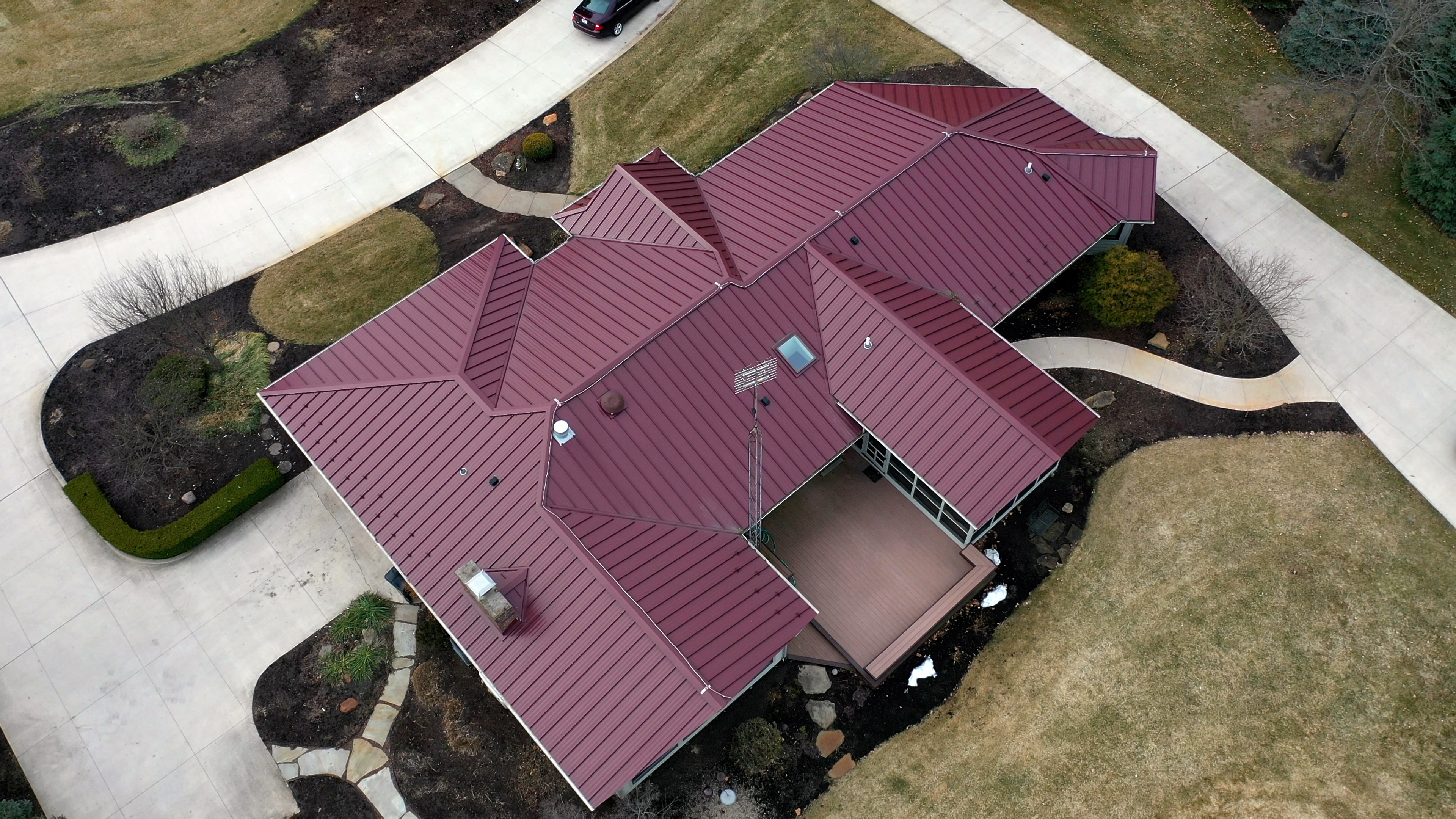
Hidden Versus Obvious Damage
Understanding the difference between obvious and hidden storm damage helps a Versailles homeowner see why an inspection matters. Here is the distinction.
Obvious Damage
Some storm damage is obvious, such as a clearly displaced panel, visible dents, or debris on the roof, which a homeowner may notice from the ground. When damage is this apparent, the need for attention is clear. Obvious damage is the kind that announces itself. It is visible and unmistakable. A homeowner can often see it. It signals an immediate need for repair.
Hidden Damage
Much storm damage, though, is hidden or subtle, such as slightly loosened fasteners, marginally lifted flashing, or stressed seams that are not visible from the ground. This kind of damage does not announce itself but can let water in over time. Hidden damage is the more insidious kind, easy to miss without a close inspection. It lurks unnoticed. It is the damage a homeowner is likely to overlook. It requires a professional eye.
Why Hidden Damage Is Risky
Hidden damage is risky precisely because it goes unnoticed, allowing a small problem to let water in gradually and cause damage before the homeowner realizes anything is wrong. By the time a leak appears inside, the hidden damage may have been letting water in for a while. This is why hidden storm damage is a concern. It does its harm quietly. The lack of obvious signs is the danger. It can worsen unseen.
Metal's Toughness Can Mask It
A metal roof's toughness can even mask subtle damage, since the roof may continue to look and largely perform fine while having a minor compromised spot. The durability that makes metal great can make subtle storm effects less apparent. So a metal roof's resilience is a reason to inspect rather than assume. Its strength can hide small issues. The roof may seem fine while harboring a problem. An inspection looks deeper.
The Value of an Inspection
This is the core value of a professional post-storm inspection, it finds the hidden, subtle damage that a homeowner would likely miss, allowing it to be addressed before it causes leaks. The inspection sees past the obvious to the issues that matter. Catching hidden damage is what makes the inspection worthwhile. It uncovers what would otherwise go unnoticed. It finds the quiet problems. That is its real value.
Hidden vs Obvious, in Short
Some storm damage is obvious, but much is hidden or subtle, like loosened fasteners or lifted flashing, which goes unnoticed and can let water in over time. A metal roof's toughness can mask it, which is why a professional inspection that finds hidden damage is valuable.
One point worth making clear for Versailles homeowners is that the durability of metal roofing, which is one of its greatest strengths, can paradoxically be a reason to be more rather than less diligent about getting a professional inspection after a severe storm. A metal roof genuinely does come through most storms very well, far better than many other roofing materials, resisting wind, shedding hail, and standing up to the elements, and in many cases a post-storm inspection will simply confirm that the roof is sound and give the homeowner welcome peace of mind. But the same toughness that makes metal perform so well can also mask the subtle damage that severe weather sometimes causes, because the roof may continue to look fine from the ground and largely keep doing its job while harboring a small compromised spot, a few fasteners loosened by wind, a section of flashing slightly lifted, a seam that was stressed. These subtle issues do not announce themselves the way a missing shingle or a caved-in section would on another roof, and that is precisely what makes them worth finding, because left unnoticed, a small lifted flashing or a few loose fasteners can let water in gradually over weeks or months, and by the time a leak finally shows up on a ceiling inside, the hidden damage may have been admitting water for a good while and caused more harm than the original storm issue would have if caught promptly. So the value of a post-storm inspection is not that metal roofs are fragile, they are not, but that a professional who knows where storm damage tends to hide can examine the vulnerable points closely and catch the subtle problems a homeowner would understandably miss from the ground, allowing them to be sealed up before they ever become a leak.
It also helps Versailles homeowners to think through what a post-storm inspection actually involves and what to do with its results, so the process feels clear rather than daunting. The right time to get an inspection is reasonably soon after any severe storm that brought hail, high winds, or significant flying debris, without long delay, both so that any hidden damage can be caught before it has a chance to cause problems and so that there is timely documentation of the roof's condition. The inspection itself is a thorough, professional examination of the roof, with particular attention to the spots where storm damage tends to show up, the panels are checked for dents and finish damage from hail, the edges, seams, and flashing are examined for lifting or loosening from wind, and the fasteners are checked for any that have worked loose, along with a look for debris impact and an assessment of the roof's overall condition. The inspector then explains what was found and provides a clear report, which gives the homeowner an honest picture of where the roof stands. From there, the path forward is straightforward. If the roof came through well, the homeowner simply has peace of mind and needs to do nothing beyond normal care. If damage is found, the sensible response is to have it repaired promptly by a reputable contractor to restore the roof's protection, and if the damage is significant, to consider an insurance claim, keeping in mind that whether a particular claim is covered depends on the policy and the carrier, so this is general information rather than insurance advice and the homeowner should check their policy and consult their insurer. The inspection's documentation can be helpful in supporting any claim.
One point worth making clear for Versailles homeowners is that the durability of metal roofing, which is one of its greatest strengths, can paradoxically be a reason to be more rather than less diligent about getting a professional inspection after a severe storm. A metal roof genuinely does come through most storms very well, far better than many other roofing materials, resisting wind, shedding hail, and standing up to the elements, and in many cases a post-storm inspection will simply confirm that the roof is sound and give the homeowner welcome peace of mind. But the same toughness that makes metal perform so well can also mask the subtle damage that severe weather sometimes causes, because the roof may continue to look fine from the ground and largely keep doing its job while harboring a small compromised spot, a few fasteners loosened by wind, a section of flashing slightly lifted, a seam that was stressed. These subtle issues do not announce themselves the way a missing shingle or a caved-in section would on another roof, and that is precisely what makes them worth finding, because left unnoticed, a small lifted flashing or a few loose fasteners can let water in gradually over weeks or months, and by the time a leak finally shows up on a ceiling inside, the hidden damage may have been admitting water for a good while and caused more harm than the original storm issue would have if caught promptly. So the value of a post-storm inspection is not that metal roofs are fragile, they are not, but that a professional who knows where storm damage tends to hide can examine the vulnerable points closely and catch the subtle problems a homeowner would understandably miss from the ground, allowing them to be sealed up before they ever become a leak.
Find Hidden Storm Damage
Versailles Metal Roofing finds the hidden storm damage a homeowner would miss across Versailles and Ripley County. Call (765) 676-3491 for a free post-storm inspection that looks past the obvious to catch subtle damage before it leaks.